Planter guide
A guide to planter materials
Every planter material trades off weight, weather resistance and finish differently. Matching the material to the climate and the location does more for a planter's lifespan than any other single decision.
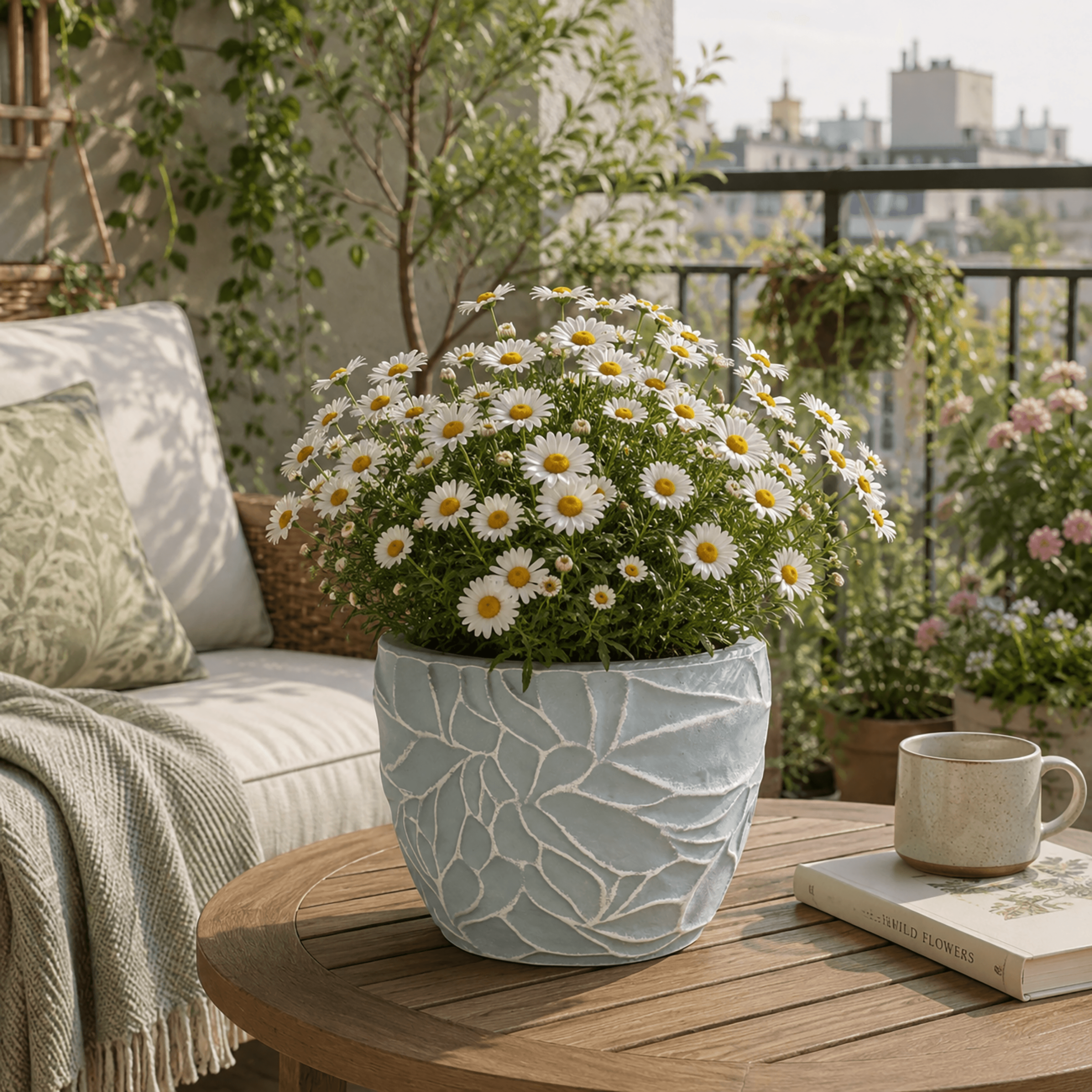
Terracotta breathes, but is porous
Its porous surface helps regulate soil moisture and roots, but it can crack in freeze-thaw climates if left outdoors year-round without care.
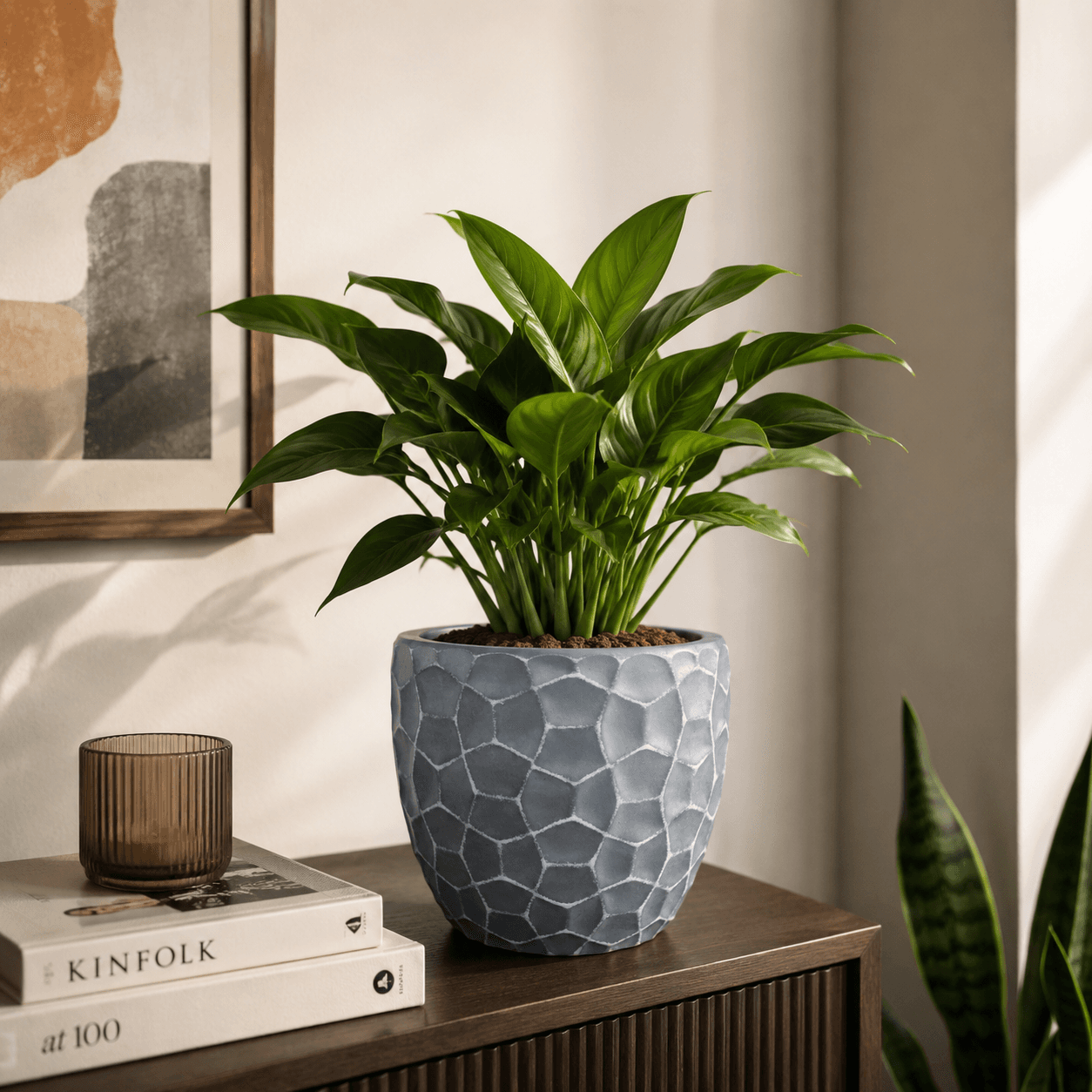
Fiber cement resists weather well
Lighter than solid concrete and highly weather-resistant, it holds colour and shape through sun and rain with minimal maintenance.
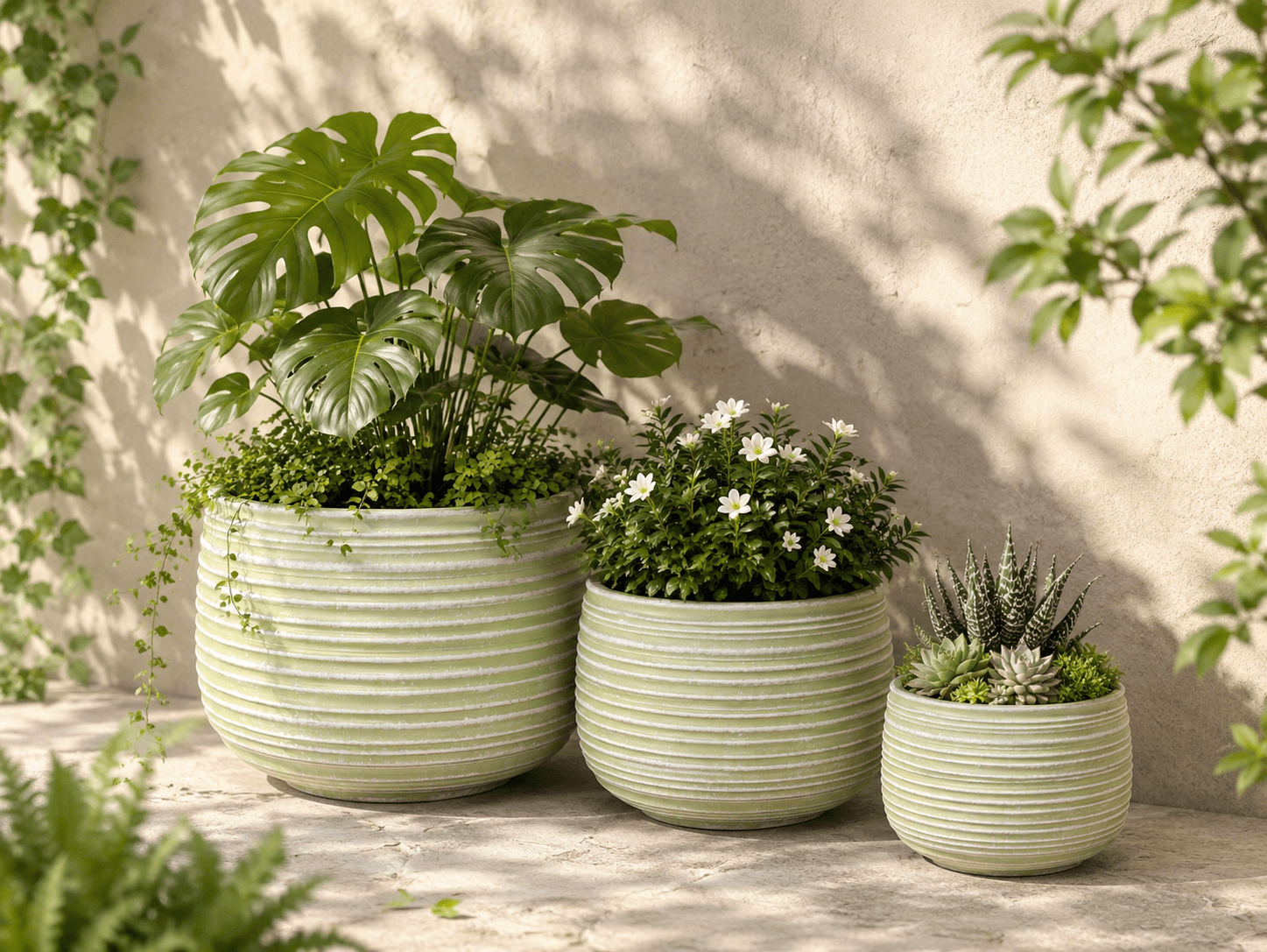
Poly resin is light and versatile
Significantly lighter than ceramic or cement, it's easier to reposition and well suited to rooftop or balcony use where weight load matters.
Putting it into practice
For a coastal or humid climate, fiber cement and glazed ceramic hold up best against moisture. For rooftops and balconies with weight restrictions, poly resin gives the most flexibility without sacrificing scale.
Frequently asked
Which planter material is lightest?+
Poly resin is the lightest of the group, making it easiest to move or place on load-sensitive surfaces like rooftops.
Does glazed ceramic fade over time?+
A quality glaze holds its colour well under normal outdoor exposure; unglazed terracotta will naturally weather to a lighter, more muted tone.
Can terracotta stay outside in winter?+
In climates with hard freezes, terracotta is best moved undercover or emptied over winter, since trapped moisture can crack the material as it freezes.
More planter guides
Looking for the full range?
View planter collection →